
In June and July, thanks to the intensive work of our team, we organized many events: lectures, debates, author meetings and conferences. We have a space where every guest can feel comfortable. Traditionally, after each meeting we organize networking. We want our Institute to be a friendly and open place for everyone and become a platform for exchanging views, making valuable acquaintances, as well as for deepening knowledge.
We will be glad to organize conferences and scientific meetings at your request.
Below we present a photo gallery from our June and July events.
Debate “All to the right – how the Indian People’s Party (BJP) of Prime Minister N. Modi won the elections and what does this mean for the world?” (6.06.2019)
We organized the debate together with the Asia Research Center. Panelists from the Boym Institute (Krzysztof Zalewski), Asia Research Center (Krzysztof Iwanek) and Polish Institute of International Affairs (Patryk Kugiel) took part in it. Debate was moderated by Patrycja Pendrakowska.
Workshops: Writing analytic texts (21.06.2019)
During the first organized at the Boym Institute workshops participants learned about the secrets of creating and editing good analytical texts. Krzysztof Zalewski, the lecturer, shared with listeners his extensive knowledge gained during his professional career.
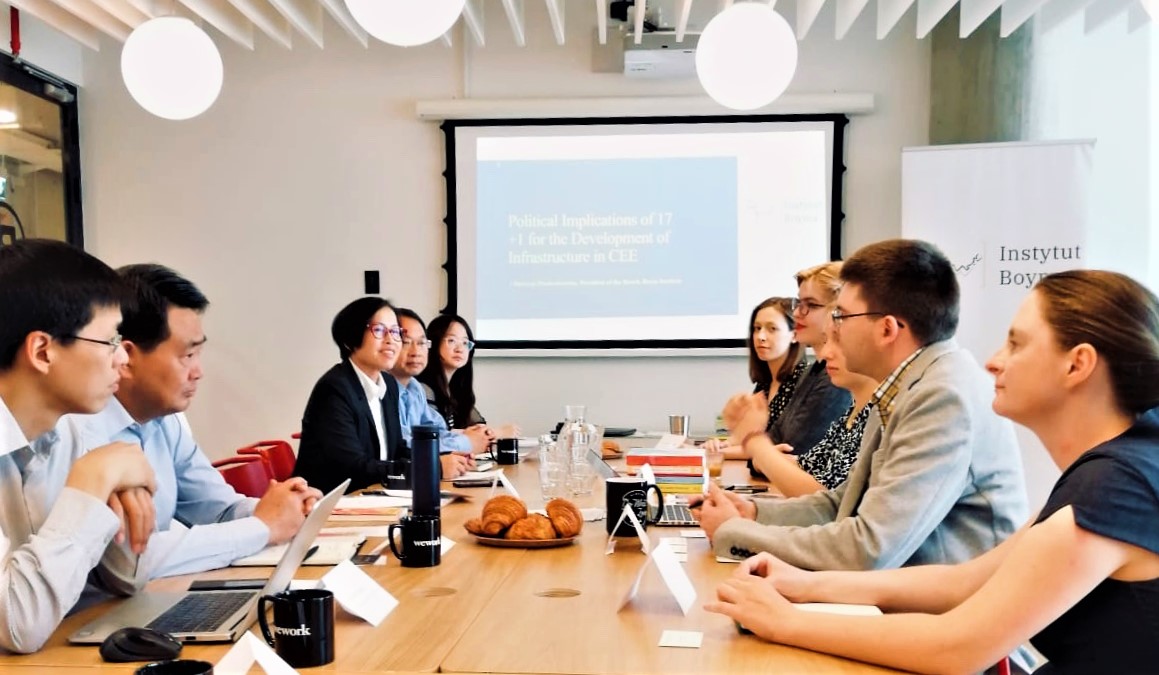
Conference with the participation of the China Academy of Governance delegation (24.06.2019)
During the meeting, we discussed the possibilities of cooperation, the current role of China in the world in the context of the contemporary international order and the relations between Poland and the PRC. The CAG delegation was very pleased with the warm reception and the environment conducive to such meetings.
Paweł Behrendt’s lecture “The New Doctrine of Pentagon and the Geopolitical Environment of East Asia” (24.06.2019)
After the lecture there was time for networking and a discussion on the current situation in the Asia-Pacific region. We hosted, among others, Dr. Muhammed Younis from Pakistan, as well as representatives of Russia and Vietnam.
Chinese Renaissance: meeting with professor Bogdan Góralczyk (27.06.2019)
Professor Bogdan Góralczyk is not only a diplomat and a great sinologist, but also the author of the book “The Great Renaissance: Chinese transformation and its consequences”, hailed as the book of the year in the field of world politics. At the author’s meeting, we discussed the consequences of Chinese transformation for world order and other issues related to contemporary China. The meeting was very popular and the discussion after the professor’s lecture lasted until late evening.
North Korean overseas laborers in Poland – meeting with Nicolas Levi (4.07.2019)
We organized the meeting with our analyst and member of the management board, Dr. Nicolas Levi, about North Korea and North Koreans who works in Poland. The main topic was related with his newest book “A statistical analysis of the North Korean overseas laborers in Poland during the period 2000-2017”
Debate “Three years after the verdict of the Permanent Court of Arbitration for the South China Sea – what is the future of the basin?” (11.07.2019)
We organized the debate together with the Institute of Sociology at the University of Warsaw. Speakers from the University of Lodz (Małgorzata Pietrasiak), Polish Institute of International Affairs (Damian Wnukowski) and the Boym Institute (Maksym Gdański, Andrzej Anders) participated in the panel. Our special guest and keynote speaker was Dr. Muhammed Younis from Pakistan.
Debate “Challenges in Asia” (22.07.2019)
By trying to make a balanced contribution to debate about challenges in Asia, we’ve made a report that describes various problems of asian countries. On this occasion, we also organized the debate, in which we talked about report’s conclusions.
What with Hongkong? (28.08.2019)
Whole world (not only Donald Trump) is looking at Hongkong protests. How will it end? Why economic and legal aspects are crucial for every scenario? What is the connection between “year 2047 problem” and these events? Our analyst, Adrian Zwoliński, answered all these questions during the meeting dedicated to this topic.
Economic cooperation between Poland and North Korea (9.09.2019)
We organized meeting with our analyst and member of the management board, Dr. Nicolas Levi, about chances and dangers for polish entrepreneurs, who wants to cooperate with their north korean counterparts.
Visitor’s Day at the Boym Institute (20.09.2019)
We decided to organize less conventional and academic meeting to get you know about our activity, take a part in discussion and see fruits of our work from last months. As always, we ended with time for networking.
Intercultural communication: how to talk, to be understood? (3.10.2019)
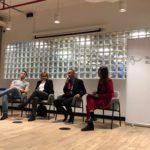
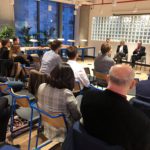
In the meeting participated Krzysztof Darewicz (sinologist and journalist), Dr. habil. Grażyna Aniszewska-Banaś (who analyses cultural aspects of international business), Dr. Nicolas Levi (analyst at the Boym Institute) and Dr. Sergiusz Prokurat (scientific worker at the Institute of Economics of Polish Academy of Sciences).
2019 elections: Poland towards Asia, Africa and Latin America (4.10.2019)
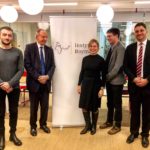
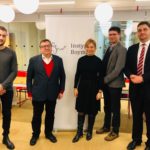
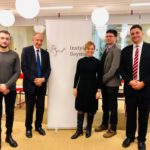
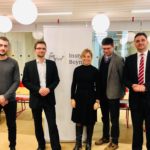
Thanks to our team efforts, we have managed to organize the debate about polish strategy towards developing countries right before elections. Our guests were polish politicians: Władysław Bartoszewski (Polish People’s Party), Michał Wawer (Confederation Liberty and Independence), Piotr Gadzinowski (Democratic Left Alliance) and Wojciech Zabłocki (Law and Justice).
Workshops: Writing analytic texts (5.10.2019)
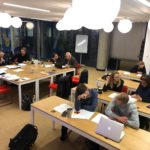
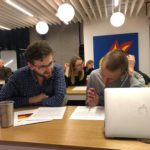
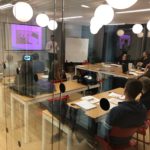
Success of the first edition of workshops about writing analytic texts encouraged us to make a second edition of this helpful for many starting journalists and analysts event. This time in broaden, two days formula.
Changes on the Silk Road: where Central Asia goes? (28.10.2019)
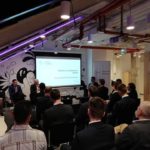

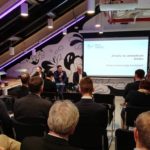
In the discussion participated H.E. Margulan Baimukhan (Ambassador of Kazakhstan in Poland), Dr. Andrzej Filipowicz (advisor of government of Uzbekistan in field of law reforms), Dr. Magdalena Sobańska-Cwalina (Central Asia analyst at the Boym Institute), Adrian Malinowski (Chief of Department of Trade and International Cooperation in the Ministry of Entrepreneurship and Technology), H.E. Bahrom Babaev (Ambassador of Uzbekistan in Poland), Piotr Guzowski (Chief of Polish-Kazakh Chamber of Trade and Industry).
USA-Iran: War or peace? (4.11.2019)
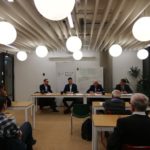
We organized the debate together with the Asia Research Center, in which participated Krzysztof Płomiński (former ambassador of Poland in Iraq and Saudi Arabia, author of “Arabia Incognita” and diplomatic advisor of Polish Chamber of Commerce), Łukasz Przybyszewski (West Asia analyst at the Center for Security Studies) and Antoni Jakubowski (analyst at the Boym Institute).
Boym Urban Studies: China – Chengdu and Guangzhou (29.11.2019)
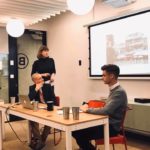
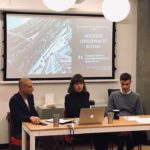
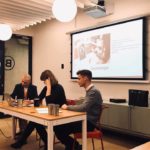
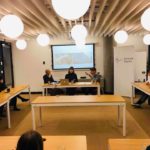
During the meeting we talked about relations between natural environment and societies of rapidly growing cities, also about role of the urban and regional infrastructure in process of sustainable development. This led us to discussion about general characteristics of urbanization in China.
Central Asia: wheter lasting peace is possible? (2.12.2019)
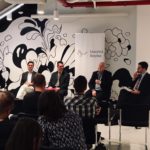
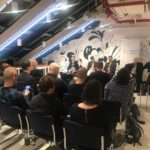
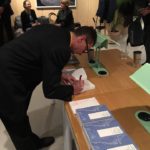

We discussed about topics related with the newest book of our analyst, Dr. Jerzy Olędzki. Except the author, in the meeting participated prof. Bogdan Góralczyk and Dr. Magdalena Sobańska-Cwalina.
Fake news and troll farms in duty of third world war (17.12.2019)
Debate over undercover journalists’ reports of Anna Sobolewska (“Superwizjer”, TVN) and Katarzyna Pruszkiewicz (Reporters Foundation), in which they showed how organized media groups promoted visions of third world war and fall of the West. We talked about how dezinformation industry influences public opinion.
We invite you to follow our pages on social media and the official website of the Institute – we are planning to organize next events in the near future.

Więcej informacji na temat: newslettera, polityki prywatności serwisu
czytaj więcej
The Boym Institute message to Indian policymakers and analysts
India’s current position towards the Russian invasion on Ukraine may damage its reputation as a major force of peace in the world
Interview with Uki Maroshek-Klarman on “Betzavta” method
Interview with Uki Maroshek-Klarman - Academic Director of the Adam Institute for Democracy and Peace in Israel. Founder of "Betzavta" method, which was created with intention of streghtening people's participation in society and making conflicts easier to solve.
Patrycja PendrakowskaCentral Asia. The winding road to regional integration
The aim of the paper is to present the current stage of integration among the Central Asian republics and to analyze directions and dynamics of this process in the nearest future. This study also attempts to identify factors which can either slow down or strengthen the process of integration as well as its causes and consequences.
Jerzy OlędzkiThe unification of the two Koreas: an ASEAN perspective
The aim of the paper is to discuss the role of the ASEAN as a critical component of the solution to the Korean unification. The Korean Unification refers to the potential reunification of both Koreas into a single sovereign Korean state led by the leadership of the two Koreas.
Nicolas LeviPeace is a precondition for LiFE. How systemic conflicts endanger developmental goals
The G20 can play a pivotal role in dealing with the mounting global challenges by proposing policy coordination and solutions disincentivising armed conflicts.
Krzysztof ZalewskiLiquidation of the Polish colony in Manchuria (north-eastern China)
Ms. Łucja Drabczak - A Polish woman born in Harbin, she spent her childhood in China. She returned to Poland at the age of 10. She is the author of the book 'China... Memories from my childhood'. She contacted us to convey special family memories related to leaving Manchuria in 1949.
The number of confirmed executions and frequent disappearances of politicians remind us that in North Korea the rules of social Darwinism apply. Any attempt to limit Kim Jong-un's power may be considered hostile and ruthless.
Roman HusarskiAre Polish Universities Really Victims of a Chinese Influence Campaign?
The Chinese Influence Campaign can allegedly play a dangerous role at certain Central European universities, as stated in the article ‘Countering China’s Influence Campaigns at European Universities’, (...) However, the text does ignore Poland, the country with the largest number of universities and students in the region. And we argue, the situation is much more complex.
Patrycja PendrakowskaLessons for China and Taiwan from the war in Ukraine
The situation of Taiwan and Ukraine is often compared. The logic is simple: a democracy is threatened by a repressive, authoritarian regime making territorial claims and denying it the right to exist.
Paweł BehrendtAssessing the New U.S. National Security Strategy: Key Takeaways on Asia
On 4th December 2025 the Donald Trump administration released the new National Security Strategy (NSS) of the United States of America. What are the key takeaways on Asia?
Jakub WitczakAiluna Shamurzaeva – Research Fellow at the Boym Institute
Her research focuses on political economy, migration studies, and international trade. Ailuna, we are more than happy to welcome you to the team!
Transcultural Winter School 2021 (8th of November — 12th of November)
This year’s research project TSRG 2021 as a collaborative initiative between Leadership Excellence Institute Zeppelin and the Boym Institute continued with a Transcultural Winter School in Zeppelin University, in Friedrichshafen.
WICCI’s India-EU Business Council – a new platform for women in business
Interview with Ada Dyndo, President of WICCI's India-EU Business Council and Principal Consultant of European Business and Technology Centre
Ada DyndoForeign Direct Investment in Vietnam
Thanks to continuous economic development, Vietnam attracts a record number of Foreign Direct Investment (FDI). The catalyst for such a strong growth of FDI in Vietnam is not only the ongoing trade war between the US and China, but also new international agreements.
Jakub KrólczykThe New Trilateral Axis in Asia: What the Pakistan-Saudi-Türkiye Pact Means for India
On 7 August 2026, Pakistan, Saudi Arabia, and Türkiye jointly entered into a defence alliance, known as the ‘Mecca Joint Defence Agreement'. Under this pact, an attack on any one of the three countries would be considered an attack on all three, and accordingly, the three countries would provide each other with the necessary defence support.
Nihar KulkarniAsia-Integration – Follow-up Report on Polish Policy Challenges Towards Asian Countries
The debate was the consequence of positive reactions to the open letter that the Boym Institute published in the summer of 2020. Many of its readers pointed out the necessity of broad consultations regarding the principles of the new multidimensional policy in order to reflect the diversity of perspectives, interests and conditions.
TSRG 2021: The Impacts of the BRI on Europe: The Case of Poland and Germany
It is important to contribute to the understanding of what the New Silk Road can mean in economic, political, leadership and cultural terms for the European countries involved. This analysis should reveal the practical consequences of the Belt and Road Initiative for Europe in the case of Poland and Germany, as well as their respective social effects.
Navigating tomorrow – the significance of Australia’s navy build-up
Australia has recently announced a plan to build the largest fleet since World War II. This move constitutes another step in Canberra's shift of defence strategy and commitment to adapt to the changing security environment.
Jakub WitczakAn interview with Mr. Meirzhan Yussupov, Chairman of the Board of the “National Company” KAZAKH INVEST” JSC - Member of the Board of Directors of the Company
Magdalena Sobańska-CwalinaBeyond Grey Hulls: Europe’s Role in “Crowdsourcing” Maritime Domain Awareness in the South China Sea
If developments observed in the South China Sea over the recent months are of any indication, it simply means that the situation has worsened. China’s continued aggression towards its neighbors – the Philippines and Vietnam in particular, has continued unabated.
Collin KohHow to deal with gender-based segregation?
Interview on the project Supporting the Economic Empowerment of Afghan Women through Education and Training in Kazakhstan and Uzbekistan. Magdalena Sobańska-Cwalina and Krzysztof M. Zalewski (The Boym Institute) in discussion with: Yakup Beris, Johannes Stenbaek Madsen, Maria Dotsenko, Gulnar Smailova,
Zespół Instytutu BoymaWorkshop – Liberalism vs authoritarianism: political ideas in Singapore and China
We cordially invite you to a workshop session “Liberalism vs authoritarianism: political ideas in Singapore and China”. The workshop is organized by Patrycja Pendrakowska and Maria Kądzielska at the Department of Philosophy, University of Warsaw on ZOOM.
Indian Roundtable – Poland’s Challenges and Opportunities in the Subcontinent
In recent years, India has been the fastest growing among the major countries' economies in the world. (...) In the coming decades, the Subcontinent's largest country may remain one of the pillars of global economic growth. This is one of the reasons why the country is already the most popular destination for Polish foreign investment in the Asian-Pacific region.
Opportunities and challenges of India’s G20 Presidency
Ada Dyndo conducts an interview with Shairee Malhotra on India’s role in G20. Shairee Malhotra serves as a Coordinator of the T20 India Taskforce on Reformed Multilateralism for India’s G20 presidency.
Ada Dyndo