
The author is Kim Byung-yeon, a professor of economics at the Department of Economics at Seoul National University. He’s a recognized distinguished researcher in Humanities and social sciences by the National Research Foundation of the Republic of Korea. He’s a regular columnist o Korean issues in leading South Korean newspapers.
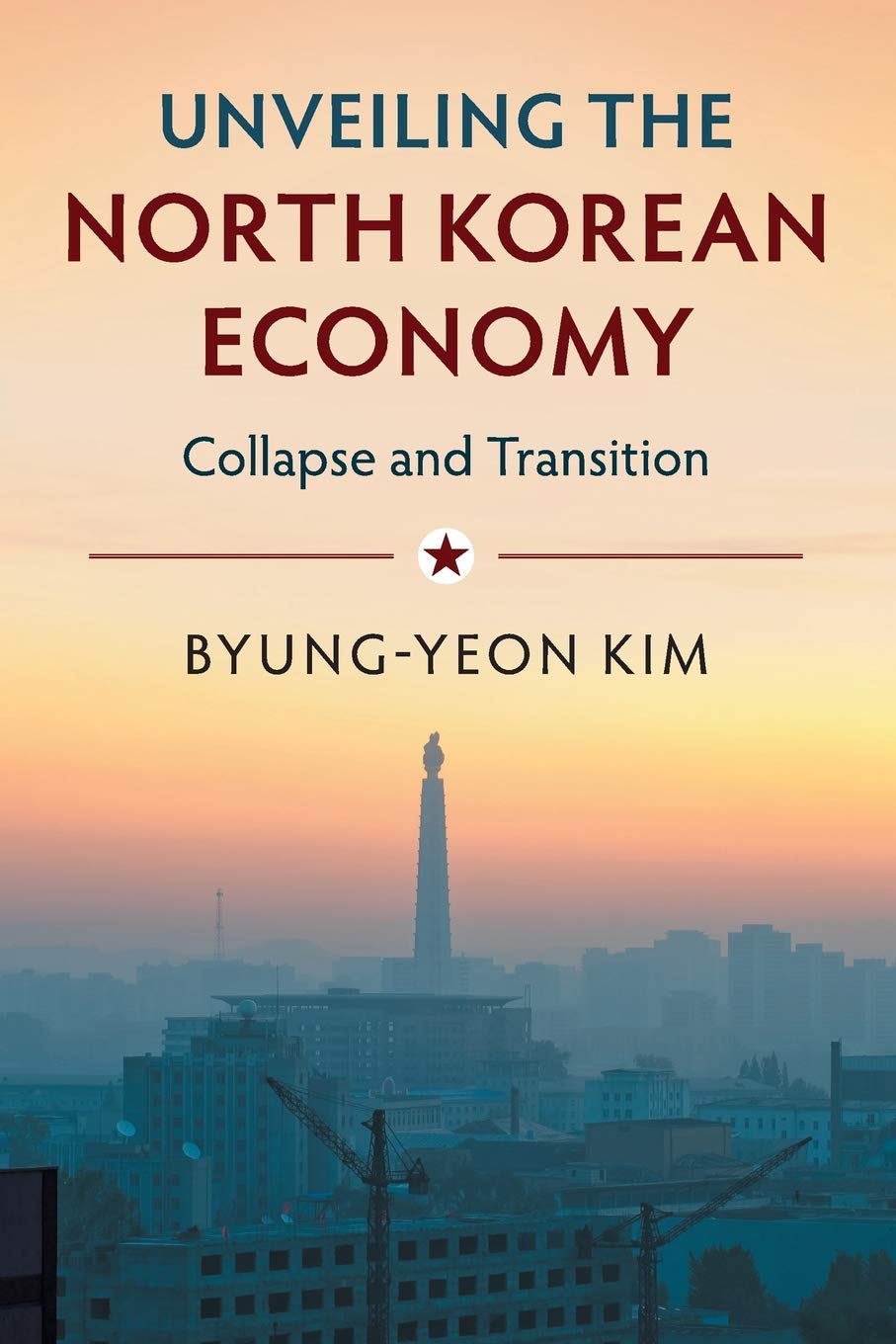
The book Unveiling the North Korean economy, written by Kim Byung-yeon was published by Cambridge University Press in 2016.B. Tauris in 2017. Excluding acknowledgements and introduction, conclusion and additional elements, the book consists of a classic structure: three chapters, where the first chapter is an evaluation of the Socialist economy, then a presentation of the North Korean economy, and finally the Transition process of the North Korean economy, demonstrating how the North Korean leadership overpassed the collapse of the Soviet Union. The book is also a synthesis and overview of studies of the North Korean economy since 1953 (starting from page 41). It’s one, but not the only one, scholar book focused on North Korean economic studies, made available in a foreign language. Interestingly similar books related to the North Korean economy were published in communist countries such as for instance the book entitled Współpraca KRLD z krajami socjalistycznymi [The cooperation of the DPRK with Socialist countries] (Warszawa: Państwowe Wydawnictwo Ekonomiczne, 1975) authored by Stefan Kojło Stefan, and the monograph prepared by Stefan Kojło and Anatol Dikij Polska – KRLD: Gospodarka, współpraca [Poland-DPRK: Economy, cooperation], (Państwowe Wydawnictwo Ekonomiczne, Warszawa 1975).
The book is equally divided between the three following chapters. The first chapter is an evaluation of the Socialist Economy (pp. 6-40). Divided in five parts, the section discussed the framework of the Socialist economy from the point of view of companies and households. The whole is explained using theoretical economic models. The second chapter (pp. 41-216) is a kind of economic history of North Korea, underlining its basements such as the Central Planning System, Juseok Funds&Spot Guidance issues. I regret no enlarged information concerning the Public Distribution System. The third chapter is more contemporary as it treats about the transition of the North Korean economy (pp. 217-300) focusing on the stabilization of its economy through liberalization and potential integration with South Korean partners. As a piece of evidence (p. 92), the author stipulates that 90 per cent of total household expenditures are made in these (unformal) markets.
The book deals with several different eras in the history emphasizing in English, elements of the North Korean economy which were rarely discussed by North Korean scholars. For instance, combined North Korean firms, known as Yeonhap Giupso, (p. 123), the News System of Foreign Trade established in 1991 (p. 124), and the Juseok Fund (pp. 130-31). Some of these elements were discussed on the other best-seller related to the North Korean economy written by Hazel Smith Markets and Military Rule.
There are some points which seems to indicate that the research of the author is somehow outdated. For example, many research surveys done by the author (pp. 185). Were done six years before the publication of the book. Also data seems to be slightly old taking in account the publication date (2017). Due to the old data, conclusion related to the relation between markets, bribery, and regime stability in North Korea may weaken over the time (p. 187) as the survey was done in 2009 (Main Bribe-Takers).
On page 164, data related to the trade of North Korea are updated to 2014, p. 169 imports of North Korea are dated till 2012. may provide more outdated examples. The author also consider the province Hamgyung (known as Hamgyungdo) as a whole in spite of its division in Hamgyongdo North (Hamgyungpukdo) and Hamgyungdo South (Hamgyungnamdo), for example on page 96. I would like to clearly indicate that in any case, the contribution of the author to the gathering of data concerning the North Korean economy is fantastic. The author also minimize the results of the North Korean economy in the 70’s, indicating that the North Korean GDP per capita was higher thatn that of South Korea. The author considers that Growth rates were overestimated in the statistics supplied by North Korean authorities (pp. 80-81).
Concerning bribes and corruption, the author indicates that bribery may have a negative, but also a positive impact. According to Frossman quoted on page 181, as “good corruption may contribute to the stability of the regime because it adds to the aggregate supply of goods and services, while bad corruption does not. Finally, the author defends, what I agree with him, that “the current situation regarding the informal economy and bribery may be characterized as an equilibrium…Given resource constraints that make it difficult for the dictator to pay his officials appropriate salaries, he implicitly allows officials to receive money from market participants.”.
Furthermore, the book has also other limitations. I consider that the author didn’t provided enough data concerning the emergence of a new social class in North Korea: the donjus. These “money owners” are barely mentioned page 64 as being “private financiers…to be financing the construction of flats”. As it wasn’t probably the purpose of the author, this social class was barely mentioned in spite of its key role in the development of the North Korean economy. The author used also few western publications (only one publication or Marcus Noland was quoted – p. 319) and no Russian sources in spite of the connections of this country to North Korea. Probably for linguistic reasons, sources in Chinese were also omitted. It would have maybe valuable to indicate it in the introduction of this monograph.
Kim Byung-Yeon. Unveiling the North Korean economy, Cambridge: Cambridge University Press, 2017, 329 pages. ISBN: 978-1-316-63516-2
Nicolas Levi Analyst on North and South Korea. He is an assistant professor at the Institute of Mediterranean and Oriental Cultures of the Polish Academy of Sciences. Author of 7 books, more than 20 academic articles, and over 50 analytical reports on the Korean Peninsula, Poland, and related issues. He conducts lectures at top universities in Poland and abroad.


Więcej informacji na temat: newslettera, polityki prywatności serwisu
czytaj więcej
Polish-Asian Cooperation in the Field of New Technologies – Report
Polish and Polish-founded companies are already on the largest continent in sectors such as: IT, educational technology, finance, marketing, e-commerce and space. Despite this, the potential lying dormant in the domestic innovation sector seems to be underutilized.
Saudi ‘Vision 2030’. How the Kingdom is using oil to end its economic overdependence on oil.
With the advent of clean energy technologies the Saudis realize they need to end their economic dependency on oil. ‘Vision 2030’ is a vast and complex plan that seeks to preserve Saudi Arabia’s regional power, economic prosperity, and - not the least - authoritarian rule in the post-oil future.
Jan KosińskiPeace is a precondition for LiFE. How systemic conflicts endanger developmental goals
The G20 can play a pivotal role in dealing with the mounting global challenges by proposing policy coordination and solutions disincentivising armed conflicts.
Krzysztof ZalewskiLessons for China and Taiwan from the war in Ukraine
The situation of Taiwan and Ukraine is often compared. The logic is simple: a democracy is threatened by a repressive, authoritarian regime making territorial claims and denying it the right to exist.
Paweł BehrendtDrug and Road Initiative, that is the Silk Road of drug
This paper deals with the issue of drug business in post-Soviet Central Asia, a region that plays a key role in the trafficking of banned substances from Asia (mainly Afghanistan) to Europe. The study briefly presents the areas that make up the picture of drug business in Central Asia, paying attention to production and distribution.
Jerzy OlędzkiPolish-Macanese Artist Duo Presents New Works in Lisbon
Artist couple Marta Stanisława Sala (Poland) and Cheong Kin Man (Macau) will present their latest works in the exhibition “The Wondersome and Peculiar Voyages of Cheong Kin Man, Marta Stanisława Sala and Deborah Uhde”, on view at the Macau Museum of the Macau Scientific and Cultural Centre (CCCM) in Lisbon, from 5 June to 6 July 2025.
Searching for Japan’s Role in the World Amid the Russia-Ukraine War
The G7 Hiroshima Summit concluded on May 21 with a communiqué reiterating continued support for Ukraine in face of Russia’s illegal war of aggression. Although Japan was perceived at the onset of the war as reluctant to go beyond condemning Russia at the expense of its own interests, it has since become one of the leading countries taking action during the war.
Rintaro NishimuraWorkshop – Liberalism vs authoritarianism: political ideas in Singapore and China
We cordially invite you to a workshop session “Liberalism vs authoritarianism: political ideas in Singapore and China”. The workshop is organized by Patrycja Pendrakowska and Maria Kądzielska at the Department of Philosophy, University of Warsaw on ZOOM.
Time for a new normal – enhancing Europe’s military profile in the Indo-Pacific in 2025
2024 witnessed a notable stepping up of Europe’s military profile in the Indo-Pacific. Building on these developments, 2025 should be a year of continuation, bringing even more defence engagement of European states with their Indo-Pacific partners.
Jakub WitczakShort summary of events at the Boym Institute
We want the Boym Institute to become a valuable platform of exchanging views, making valuable acquaintances and, above all, deepening knowledge. Therefore, we undertake the organization of many events: debates, lectures, and conferences.
Transcultural Winter School 2021 (8th of November — 12th of November)
This year’s research project TSRG 2021 as a collaborative initiative between Leadership Excellence Institute Zeppelin and the Boym Institute continued with a Transcultural Winter School in Zeppelin University, in Friedrichshafen.
From ‘strategic engagement’ to ‘competition’. Interview with William Yu
Ewelina Horoszkiewicz in conversation with Professor William Yu (UCLA) on USA, China and Europe. Professor William Yu is an economist with the UCLA Anderson Forecast and specializes in the economies of Los Angeles and China.
Ewelina HoroszkiewiczBook review: “Europe – North Korea. Between Humanitarianism And Business?”
Book review of "Europe – North Korea. Between Humanitarianism And Business?", written by Myung-Kyu Park, Bernhard Seliger, Sung-Jo Park (Eds.) and published by Lit Verlag in 2010.
Nicolas LeviAre Polish Universities Really Victims of a Chinese Influence Campaign?
The Chinese Influence Campaign can allegedly play a dangerous role at certain Central European universities, as stated in the article ‘Countering China’s Influence Campaigns at European Universities’, (...) However, the text does ignore Poland, the country with the largest number of universities and students in the region. And we argue, the situation is much more complex.
Patrycja PendrakowskaTaiwanese Perceptions of Russia’s Ukraine war
Since the invasion of Ukraine, the Taiwanese government remained committed to its position of condemnation for Russia, humanitarian support for Ukraine, and deep appreciation and admiration for the Ukrainian people’s will to defy power, resist aggression, and defend their nation.
Kuan Ting ChenMeeting with Dr. Uki Maroshek-Klarman
It’s a great pleasure for the Boym Institute to organize an open meeting with dr Uki Maroshek who founded the betzavta method. Betzavta is taught across the globe at the Adam Institute for Democracy and Peace in Jerusalem as well as in other institutions in Europe and the Middle East.
Online Course: “Educational tools for addressing the effects of war”
The Adam Institute for Democracy and Peace is offering “Betzavta” facilitators, middle school and high school educators, social activists, communal activists and those assisting refugees an online seminar to explore educational issues related to wartime.
Chinese work on the military use of artificial intelligence
Intensive modernization and the desire to catch up with the armed forces of the United States made chinese interest in the military application of futuristic technologies grow bigger.
Paweł BehrendtForeign Direct Investment in Vietnam
Thanks to continuous economic development, Vietnam attracts a record number of Foreign Direct Investment (FDI). The catalyst for such a strong growth of FDI in Vietnam is not only the ongoing trade war between the US and China, but also new international agreements.
Jakub KrólczykWill 2023 be the year of improving relations between Albania and South Korea?
In April 2021, the 30 years of establishing diplomatic relations between the Republic of Korea (ROK) and Albania was officially organized in the South Korean embassy in Athens, the capital of Greece. The localization of these official festivities perfectly pictured the nature of the relations between these two countries.
Nicolas LeviInterview with Arthur Tun on Myanmar’s Coup d’État
On the 1st of February 2021, Myanmar’s military forces overthrew the government and arrested the Prime Minister, Aung San Suu Kyi. On the fifth anniversary of these events, the Boym Institute decided to ask what Myanmar looks like after the coup.
Paweł Mazurek“Green growth” may well be more of the same
Witnessing the recent flurry of political activity amid the accelerating environmental emergency, from the Green New Deal to the UN climate summits to European political initiatives, one could be forgiven for thinking that things are finally moving forward.
Dawid JuraszekUzbekistan, under the leadership of President Shavkat Mirziyoyev, has embarked on a path of reform. Almost daily, the media there report on new initiatives and projects. It is no coincidence that in December 2019 The Economist awarded Uzbekistan the country of the year title.
Magdalena Sobańska-CwalinaNuclear Temptations in an Age of Uncertainty
For decades, the pursuit of weapons of mass destruction was largely confined to rogue and authoritarian regimes. Today, the discussion increasingly includes U.S. allies, signaling a profound shift in global security dynamics
Paweł Behrendt