

Arthur Tun is a PhD Candidate in History and War Studies at King’s College London with a Master’s in Strategic Studies (military) and a BA in History and Theatre/Drama Studies. He worked at the Myanmar Institute of Strategic and International Studies with a focus on Civil-Military Relations in Myanmar and its geopolitical position in the region. Presently, he is looking to the First Anglo-Burmese War 1824-1826, where he seeks to use his familiarity with both British and Burmese military histories to address some of the strategic and underlying social issues in modern Myanmar.
On the 1st of February 2021, Myanmar’s military forces overthrew the government and arrested the Prime Minister, Aung San Suu Kyi. Although the military junta had governed Myanmar for many years until 2011, when the process of democratisation began, there was hope among Myanmar’s citizens that the era of authoritarian rule had passed. Unfortunately, the military attempted to retake full control over the country, which led to resistance from various groups, mainly ethnic minorities. On the fifth anniversary of these events, the Boym Institute decided to ask what Myanmar looks like after the coup.
Paweł Mazurek: How did you find out about the coup, and what was your day like at that time?
Arthur Tun: I found out about the coup through an Instagram story 8am in the morning on the 1st of February 2021, the moment when I woke up and opened my phone.
PM: How did Myanmar society react to the military coup?
AT: Myanmar society reacted with shock and horror, especially from those who had grown up under the previous military rule before 2011. It did not make sense for the military leaders to launch a coup against us, as they and their networks benefited greatly from the economic openness the country had gained in the last decade before 2021. Personally, for me, it was a shock that it happened so soon. As someone who worked in a research think tank part of the civilian Ministry of Foreign Affairs, tension between the military and their allies and the civilian government and their supporters had always been around, and a potential conflict was not completely out of our mind, but I did not expect it to happen so soon.
PM: How do guerrilla groups operate in Myanmar, and what do relations between society and the guerrillas look like?
AT: I can only speak for the guerrillas in Yangon, which were largely cell-based, generally made up of youths, many from Gen Z, who linked up through social media as forms of communication, ranging from WhatsApp, Facebook, and Viber, though more secure apps became prominent as crackdowns increased. Relations in the city, at least, were localised at first, with many cells operating within their own neighbourhoods, but this was largely in the beginning. After the brutal crackdowns, most of the youths who wanted to fight fled to territories along the border regions controlled by the Ethnic Armed Organisations (EAOs), depending on where you were. By the time of the fighting and the formation of the National Unity Government and its declaration of war against the State Administration Council (SAC) Junta government, the guerrillas were organised along two major lines, the People Defense Force (PDF) and the Local Defense Force (LDF). In theory, the PDFs were combat oriented and more mobile, while the LDF was more support and static in nature, providing much of the intelligence. The cells in the cities were a mix of both in the beginning. Much of the guerrilla groups are local youths that chose to fight and thus were quite close and determined to look after, at the very least, their local communities and thus enjoyed much support from society in the beginning. In the later part of the war, as desperation hits, some groups have been hated by the society for pillaging and plundering, but the majority of the groups remain to be seen positively by the Myanmar public, even as criticism against the Government in Exile, the National Unity Government has increased.
PM: How has life changed for ordinary people since the coup?
AT: Quite drastic. Without direct support from the international community or our neighbours, the shortage of necessities has increased. Thanks to the economic development that occurred during the 10 years of liberal democracy under Aung San Suu Kyi and the NLD government, the cities at least have some basic foundation and connections to help keep things going for the ordinary people, but it is a struggle, especially for goods such as medicine and other healthcare. Electricity and water supply are rationed inconsistently, with usually only 6 to 8 hours per day. Fuel shortage is common. Inflation is extremely high, jumping nearly 3 times. It used to be 1300 kyat to 1 US Dollar, but has changed to 3600 kyat now! It is difficult, especially for those elderly whose adult children, especially male may have gone to war or to avoid being conscripted. It is something I remain worried about as of this interview.
PM: How does the current government treat people, and what is the public’s attitude toward the government?
AT: The SAC government could best be described as fully tyrannical to being neglectful, depending on where you were. Objectively speaking, the SAC government is definitely hated by the public at worst, and seen as unreliable and unworthy at best. Most SAC appointees do not pursue much public work or do much to help the community, and work on hearts and minds, almost like treating the people like a potential enemy. Some could be as viral media portrays them extremely cruel, but fear of being assassinated or attacked by the local resistance has made it less for many. Regardless, SAC local authorities are seen to be extremely corrupted who need to be paid bribes for necessities or paperwork. Many Burmese say the law is in the hands of the man with the gun and could change depending on what the person would do, and we are all at the mercy of that man.
As for the soldiers, while not all SAC troops would commit atrocities, the fear is largely how you can’t tell who would commit them and who wouldn’t. Some troops at checkpoints or on patrol fear the public itself, of hidden guerrillas attacking them, and this mutual fear of each other tends to keep the peace, as it somewhat did for my own neighbourhood. However, at many other times, these garrisons would harass the people around them, then retreat into their fortified area, such as robbing cafes and grocery stalls. I witnessed both cases, with one time at a checkpoint, a soldier had checked my phone and saw a meme post making fun of the SAC government, where he simply laughed and handed back telling me to delete it. In another, I saw them firing into houses, shouting and harassing people near their base. In another, when our neighbourhood caught burglars and looters and told the SAC Police to arrest them, they asked if we would give them safe passage, and we were not even resistance fighters. It is quite complicated.
The SAC’s excuse is that they cannot operate efficiently or properly until the rebels are defeated, but growing up in the late 1990s and early 2000s under the previous junta, the State Peace and Development Council (SPDC), it was largely the same experience I went through. The corruption, constant military checks and unknown civilians dressed as secret police like informants. I would compare that period to Poland under Nazi Occupation and the Polish People’s Republic, but with a stronger military presence. It is heartbreaking for me as the uniforms of men who are supposed to protect you are what you need to fear most.
PM: Is there any chance of political change five years after the military coup?
AT: Personally, I do not think so unless a dramatic shift happens in the war or if there is a major foreign intervention. The only change I can see is if the SAC makes major concessions and offers to drop or share political power and recognise the forces opposing them, such as a moderate faction taking over. However, this is a slim chance as the Myanmar military tradition comes from the formation of two armies during World War II, the British Burma Army and the Japanese Imperial Army, where men are taught to fight a stubborn, unyielding defence. They will retreat until they can no longer stand at a final stand. Furthermore, a devastating earthquake that killed hundreds and injured thousands had happened, and the SAC still resolved to fight on. That is the sort of determination that suggests their leader and causes matters more to them than the people. And the resistance will continue to fight them as long as they remain in power and dictate their terms. I cannot see anything will change in the near future as much as I wish it could.
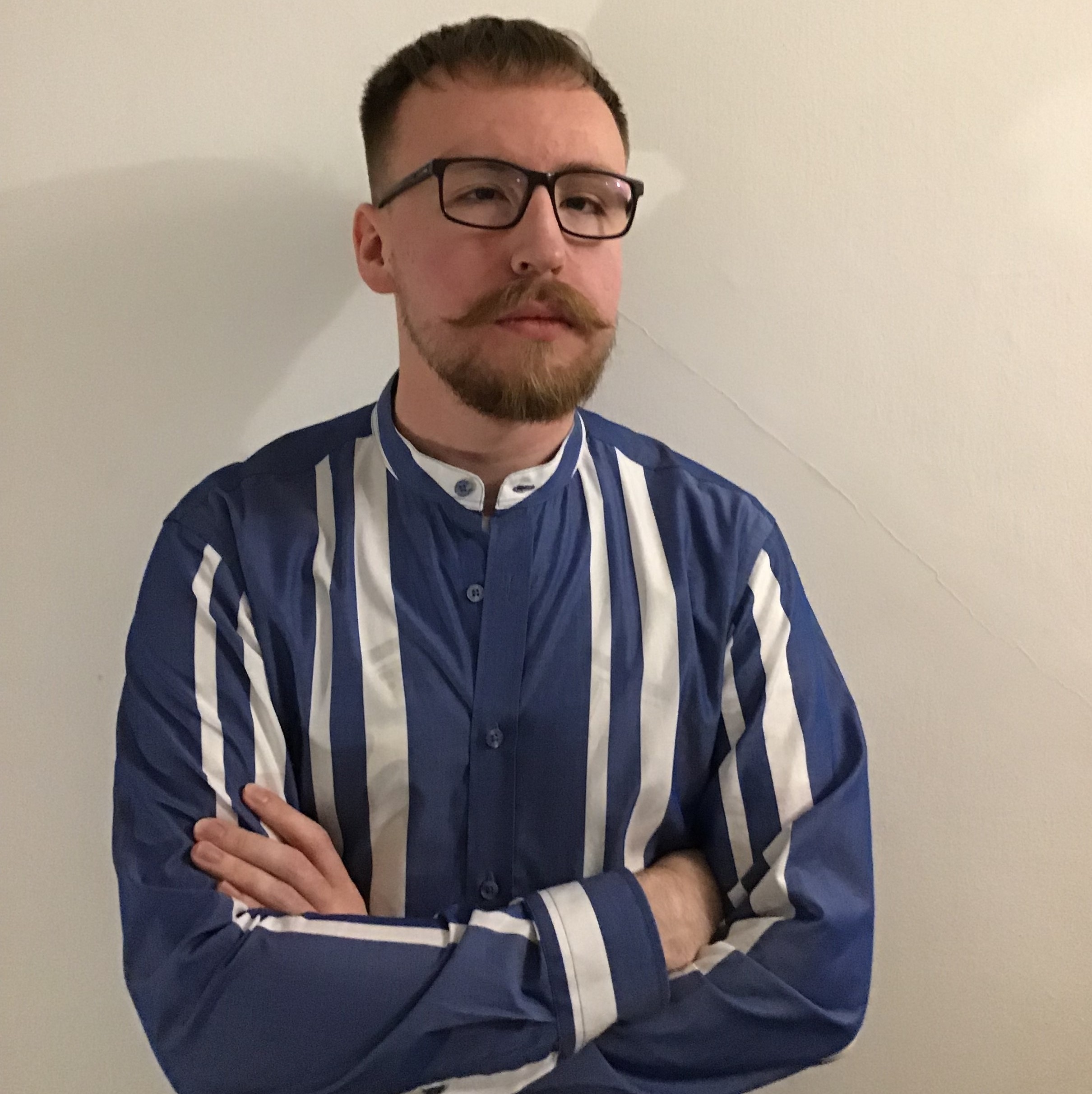
Paweł Mazurek PhD candidate in Political Science and Administration at the John Paul II Catholic University of Lublin. Visiting Research Student at the Defence Studies Department at King’s College London. His research interests include U.S. – China relations, the U.S. Congress, and theories of international relations.


Więcej informacji na temat: newslettera, polityki prywatności serwisu
czytaj więcej
Voices from Asia – introduction
We would like to cordially invites all to the new series "Voices from Asia" that is devoted to the Asian perspectives on the conflict in Ukraine. In this series, we publish analysis by experts based in Asia or working on Asian affairs who present their positions on this matter.
Meeting with Dr. Uki Maroshek-Klarman
It’s a great pleasure for the Boym Institute to organize an open meeting with dr Uki Maroshek who founded the betzavta method. Betzavta is taught across the globe at the Adam Institute for Democracy and Peace in Jerusalem as well as in other institutions in Europe and the Middle East.
At the Boym Institute we are coming out with new initiative: #WomeninBoym, which aims to show the activity of this – often less visible – half of society. We will write about what women think, say and do. We will also publicise what women are researching and writing.
“May you be the mother of a thousand sons” – the status of women in Indian society
The 1950 Indian Constitution introduced the principle of equal opportunities for gender equality, which grants women and men the same rights in family life, political, social and economic life. So why is it that nearly forty per cent of girls aged 15-17 do not attend school, the custom of dowry giving is still cultivated and prenatal sex selection is still a huge social problem?
Magdalena RybczyńskaChina’s Social Credit System – How will it affect Polish enterprises in China?
The Social Credit System currently being rolled out in China may pose significant organisational and legal challenges for both foreign and Polish entities operating in China. We invite you to read our report, prepared in cooperation between the Boym Institute and Kochanski & Partners.
Patrycja PendrakowskaWICCI’s India-EU Business Council – a new platform for women in business
Interview with Ada Dyndo, President of WICCI's India-EU Business Council and Principal Consultant of European Business and Technology Centre
Ada DyndoLessons for China and Taiwan from the war in Ukraine
The situation of Taiwan and Ukraine is often compared. The logic is simple: a democracy is threatened by a repressive, authoritarian regime making territorial claims and denying it the right to exist.
Paweł BehrendtThe Boym Institute message to Indian policymakers and analysts
India’s current position towards the Russian invasion on Ukraine may damage its reputation as a major force of peace in the world
Join us for the Adam Institute’s Latest Online Course
Conflict resolution models have been primarily crafted and codified by men. The Adam Institute for Democracy and Peace invites you to be part of that much-needed change through an experiential and innovative Online Course "Conflict Resolution in the Context of Gender".
On conflict in the Middle East: Malik Dahlan’s Letter to President Isaac Herzog
This letter has been included into our Voices From Asia series, as we consider it a significant addition to the ongoing discussion surrounding the ongoing conflict in the Middle East.
Malik DahlanEnvironmental problems transcend not only national borders but also historical periods. And yet debates on the necessary measures and timelines are often constrained by considerations of election cycles (or dynastic successions) in any given country.
Dawid JuraszekWorkshop – Liberalism vs authoritarianism: political ideas in Singapore and China
We cordially invite you to a workshop session “Liberalism vs authoritarianism: political ideas in Singapore and China”. The workshop is organized by Patrycja Pendrakowska and Maria Kądzielska at the Department of Philosophy, University of Warsaw on ZOOM.
A Story of Victory? The 30th Anniversary of Kazakh Statehood and Challenges for the Future.
On 25 May 2021, the Boym Institute, in cooperation with the Embassy of the Republic of Kazakhstan, organised an international debate with former Polish President Aleksander Kwaśniewski (1995-2005).
Polish-Macanese Artist Duo Presents New Works in Lisbon
Artist couple Marta Stanisława Sala (Poland) and Cheong Kin Man (Macau) will present their latest works in the exhibition “The Wondersome and Peculiar Voyages of Cheong Kin Man, Marta Stanisława Sala and Deborah Uhde”, on view at the Macau Museum of the Macau Scientific and Cultural Centre (CCCM) in Lisbon, from 5 June to 6 July 2025.
Interview: Why Does Poland Need ‘17+1’?
Interview with Michał Wójcik - Director of the Department of International Cooperation of the Ministry of Marine Economy and Inland Navigation (DWM MGMiŻŚ). In the Ministry, he is leading the Coordinating Secretariat for Maritime Issues , monitoring the cooperation of Central and Eastern European States with China.
Krzysztof ZalewskiPaths to Asia: Conversations that Inspire
Wojciech Jaworski is the founder of Huqiao Games, a company specializing in bringing PC games to the Chinese market. A graduate of Jagiellonian University and participant in the “Chinese Bridge” program, he is currently working on a new, as yet unannounced project in the gamedev/tech industry.
Patrycja PendrakowskaThe North Korean nuclear dismantlement and the management of its nuclear wastes
Evidence suggests that North Korea stores its high-level nuclear waste (HLW) in liquid form in tanks on the same site where it is made, and has not invested in infrastructure to reduce, dentrify, or vitrify this waste. However, this is just the tip of the iceberg, one of many aspects of the North Korean nuclear waste problem.
Nicolas LeviRoman Catholic cemetery in Harbin (1903-1958)
First burials of Catholics, mostly Poles but also other Non-Orthodox believers took place in future Harbin in the so called small „old” or later Pokrovskoe Orthodox cemetery in the future European New Town quarter and small graveyards at the military and civilian hospitals of Chinese Eastern Railway at the turn of XIX and XX century.
Jerzy CzajewskiFrom ‘strategic engagement’ to ‘competition’. Interview with William Yu
Ewelina Horoszkiewicz in conversation with Professor William Yu (UCLA) on USA, China and Europe. Professor William Yu is an economist with the UCLA Anderson Forecast and specializes in the economies of Los Angeles and China.
Ewelina HoroszkiewiczAsia-Integration – Follow-up Report on Polish Policy Challenges Towards Asian Countries
The debate was the consequence of positive reactions to the open letter that the Boym Institute published in the summer of 2020. Many of its readers pointed out the necessity of broad consultations regarding the principles of the new multidimensional policy in order to reflect the diversity of perspectives, interests and conditions.
Europe and the Consequences of China’s First Step on the Moon
Just a few years ago, it was assumed that the United States would almost automatically reclaim the lead in landing on the Moon. The original timeline envisioned Artemis III for 2024, but successive delays pushed the mission first to 2025–2026 and now to no earlier than mid-2027.
Kamil GolemoThe Adam Institute invites you to join us for a new engaging course, tailored to participants from Poland, taught on ZOOM.
Are Polish Universities Really Victims of a Chinese Influence Campaign?
The Chinese Influence Campaign can allegedly play a dangerous role at certain Central European universities, as stated in the article ‘Countering China’s Influence Campaigns at European Universities’, (...) However, the text does ignore Poland, the country with the largest number of universities and students in the region. And we argue, the situation is much more complex.
Patrycja PendrakowskaTSRG 2021: The Impacts of the BRI on Europe: The Case of Poland and Germany
It is important to contribute to the understanding of what the New Silk Road can mean in economic, political, leadership and cultural terms for the European countries involved. This analysis should reveal the practical consequences of the Belt and Road Initiative for Europe in the case of Poland and Germany, as well as their respective social effects.