
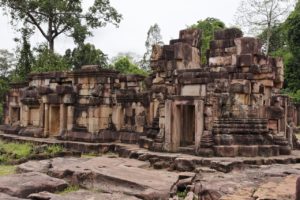
The border conflict between Thailand and Cambodia is much more than just a territorial dispute. Rooted in historical ambiguities, it has become a tool for domestic political maneuvering in both countries and a stage for international strategic competition. While nationalist politics and regime consolidation drive actions on the ground, major powers such as China and the United States leverage the crisis to protect and expand their regional influence. Understanding this conflict requires looking beyond maps, into the interplay of history, politics, and global interests.
Colonial legacies and political flashpoints
The border conflict between Cambodia and Thailand has deep historical roots, dating back to the era of French Indochina (1887–1954), when France administered Cambodia, while Thailand remained the only Southeast Asian country never colonized. Like many borders drawn by colonial powers, French maps failed to account for the region’s complex cultural and geographic realities. As a result, several historic temples ended up within Cambodian territory despite their strong historical and cultural ties to Thailand, creating an 800-kilometre border marked by overlapping claims and persistent disputes.
These imprecise boundaries have fueled decades of tension, most notably at the Preah Vihear temple. Although the International Court of Justice ruled in 1962 and reaffirmed Cambodian sovereignty in 2013, these decisions failed to fully stop intermittent clashes. Tensions escalated again in 2025, beginning in February, when Cambodian tourists sang their national anthem at Ta Moan Thom – an act perceived as provocative by Thai authorities. The situation worsened in late May after a violent confrontation in the “Emerald Triangle” left a Cambodian soldier dead, with both militaries blaming each other for the outbreak of hostilities.
The conflict was further complicated in June, when a 17-minute private phone call between Thai Prime Minister Paetongtarn Shinawatra and former Cambodian Prime Minister Hun Sen was leaked. In the recording, Paetongtarn spoke to Hun Sen in a familiar tone, offering to “take care of” border issues and openly criticizing a senior Thai military commander as an “opponent” who “just wanted to look tough”. The leak sparked domestic outrage, as it appeared to undermine the military and called into question the prime minister’s loyalty to national interests, ultimately contributing to Paetongtarn Shinawatra’s removal from office.
Escalation, mediation, and the limits of peace agreements
Tensions reached a critical point in July, when a landmine explosion injured three Thai soldiers during a routine patrol near the border. Thailand accused Cambodia of deliberately planting landmines on Thai territory, while Cambodia rejected the allegation, claiming that the Thai patrol had deviated from agreed routes and entered Cambodian territory. Phnom Penh further suggested that the incident may have been intended as a provocation to justify a broader military response.
In reaction to the incident, Thailand closed several northeastern border crossings, withdrew its ambassador from Phnom Penh, and expelled the Cambodian ambassador from Bangkok. Cambodia responded by recalling all diplomatic staff from its embassy in Thailand and downgrading diplomatic relations to their lowest level. At the same time, Thailand imposed martial law in several border regions, signalling readiness for a wider confrontation.
Starting from July 24, open clashes erupted along multiple sections of the border. Fights continued till 28 July. Artillery exchanges and small-arms fire led to significant civilian displacement and military casualties. By the end of the July fighting, at least 38 people had been killed, and more than 300,000 civilians were forced to flee their homes. The violence marked the most serious border fighting between the two countries in over a decade.
International mediation efforts intensified as the conflict threatened regional stability. Malaysia, acting in its capacity as an ASEAN member, played a central role, although Thailand initially rejected third-party mediation. Under growing diplomatic pressure from China and the United States—including direct intervention by President Donald Trump, who warned that trade negotiations could be suspended and threatened punitive tariffs—both Thailand and Cambodia agreed to an “immediate and unconditional” ceasefire. While the United States exerted significant pressure to bring both parties to the negotiating table, Malaysia emerged as the key actor actively facilitating dialogue and proposing practical solutions. The agreement was signed in Kuala Lumpur by the prime ministers of both countries and took effect on July 28. Although the ceasefire successfully halted large-scale hostilities, it failed to address the underlying causes of the conflict.
Efforts toward de-escalation continued in the following months. In October 2025, the two states signed the Kuala Lumpur Peace Accord during the 47th ASEAN Summit, with the participation of President Trump and Malaysian Prime Minister Anwar Ibrahim. Despite its symbolic importance, the agreement proved fragile. In early November, Thailand suspended implementation of the accord after another landmine explosion injured two Thai soldiers. That led to an exchange of gunfire between Thai and Cambodian forces on 12 November, which resulted in the death of a civilian. Moreover, on 17 November, Thailand’s Ministry of Defence claimed that the landmines found along the border had been recently installed and were not remnants of earlier conflicts, as Cambodia had argued.
On December 7, intense exchanges of fire broke out along the border. Cambodia accused Thai forces of initiating the fight and requested an investigation by the ASEAN Observer Team. In response, the special ASEAN Foreign Ministers’ meeting was held in Kuala Lumpur (22 December 2025) to address the escalating border conflict. Malaysia and ASEAN Chair Prime Minister Anwar Ibrahim were actively urging both sides to end the conflict. As mentioned in ASEAN Chair’s Statement, “The Meeting appreciated the proactive role and continued engagement by Prime Minister Anwar Ibrahim and President Donald J. Trump, with active participation of ASEAN Member States and China”.
A new ceasefire was signed on December 27. However, violations were reported almost immediately. On December 29, Thailand further accused Cambodia of breaching the truce by deploying over 250 drones across the border. Although Thailand released 18 Cambodian prisoners of war on December 31 as a confidence-building gesture, tensions remained high.
The fragility of the ceasefire became evident again on January 6, 2026, when Thailand accused Cambodia of violating the ceasefire and wounding one Thai soldier. Cambodia denied the accusation, claiming that the explosion resulted from a pile of rubbish and that two Cambodian soldiers were also injured in the incident. While both governments downplayed the incident as unintentional, Thailand warned that further violations could trigger a military response. A meeting to discuss border surveying and demarcation was also proposed, but Thailand indicated that meaningful negotiations would likely be postponed until after its February 2026 elections.
Meanwhile, in early January, the USA announced a $45 million aid package aimed at border stabilization, community recovery, demining operations, and efforts to combat drug trafficking and cyber scam networks, including operations targeting scam centers in Cambodia. The American aid package can be seen as a response to China’s humanitarian efforts (about $2.8 million aid to Cambodia) and regional influence carried out through the Belt and Road Initiative. In parallel, the ASEAN Observer Team carried out six monitoring missions along the border after December’s ceasefire.
From the battlefield to the information space: media and official narratives
It is also worth noting that although the fighting along the border has ceased, media and rhetorical confrontations have continued. On the 7th of January 2026, Cambodia issued a press release through its Ministry of Foreign Affairs (MFAIC). The statement emphasized Cambodia’s cooperation with the AOT, which was tasked with monitoring, verifying, and reporting on conditions along the border. The release framed Cambodia as committed to peaceful dispute resolution under international law. However, the statement also included concerns about continued military presence and the fact that thousands of Cambodia’s citizens from four different provinces still cannot come back to their homes. On 8 January, Fresh News (a pro-government Cambodian news portal) published official statements by Hun Sen and Prime Minister Hun Manet accusing Thailand of occupying civilian border areas. Thailand responded the same day with an official statement denying the allegations and rejecting Cambodia’s claims.
On 12 January, Thailand’s Ministry of Foreign Affairs issued a press briefing aimed at portraying Thailand as a responsible and law-abiding actor. The briefing emphasized strict compliance with the Joint Statement, sustained military restraint, and the effective use of crisis communication mechanisms. At the same time, the briefing shifted the focus away from kinetic incidents on the ground toward the informational and political domain, accusing Cambodian officials of engaging in verbal provocations, spreading unsubstantiated claims, and interfering in Thailand’s domestic political affairs. Particularly significant was Thailand’s explicit reference to international legal instruments, including the 1954 Hague Convention and the 1972 World Heritage Convention. By alleging that Cambodian forces had used protected historical sites for military purposes, Bangkok pre-emptively constructed a legal and moral justification for its past and potential future actions, framing them as acts of self-defence conducted in accordance with the principles of necessity and proportionality.
This legalistic narrative serves a dual purpose: it deters international criticism while signalling to external stakeholders – especially the United States, China, and ASEAN – that Thailand is a predictable actor committed to stability rather than escalation.
Interestingly, on 13 January, Cambodia’s Fresh News released a statement about the ASEAN Observer Team. It carefully frames its role as transparent and legally grounded, repeatedly stressing observation, verification, and adherence to ASEAN and UN norms, which can suggest a conscious effort to shape international perception and legitimize its position. The detailed documentation of civilian sites and infrastructure damage may indicate a strategic move to highlight the consequences of the conflict while reinforcing Cambodia’s credibility. The emphasis on supporting ASEAN observers and strengthening their mandate can be read as a subtle push for regional oversight, suggesting Cambodia might prefer international verification to bolster its stance and potentially limit Thailand’s unilateral actions.
Overall, the post-ceasefire period illustrates how the conflict increasingly shifted from the battlefield to the informational and legal domains. Media statements and official rhetoric became tools for legitimization, blame-shifting, and international positioning, underscoring the limited effectiveness of ceasefires and peace agreements that lacked enforcement mechanisms and mutual trust. Despite sustained international mediation, repeated violations and rhetorical escalation continued to undermine prospects for lasting stability.
Domestic context – what drives the conflict?
-
Thailand: electoral politics, nationalism, and the struggle for power
Thailand’s contemporary political landscape is deeply shaped by the persistent entanglement of electoral politics, military intervention, and powerful political families. Since 1932, it has been a constitutional monarchy, established after the first coup that ended the king’s absolute power. Since then, the country has experienced 12 successful coups.
The political scene is divided between the Yellow and Red fractions. The Yellows – urban elites, and monarchists – defended the status quo and overthrew Prime Minister Thaksin Shinawatra in 2006. The Reds – Thaksin supporters, farmers, and provincial residents – push for greater democracy and support his social programs. The role of the army is a crucial factor. The military acts as an arbiter in political crises, intervening forcefully in conflicts between the Yellow and Red Shirts, often supporting the Yellow camp. Not every soldier “wears yellow shirt” literally, but institutionally, the army favors Yellow/conservative elites over Red/rural populists, using courts and Senate to block the latter.
For instance, the overthrow of Thaksin Shinawatra in 2006 demonstrated the military’s intervention in the conflict between the Yellow and Red Shirts. In later years, however, his family returned to power, with several members serving as prime ministers, including his brother-in-law Somchai Wongsawat, his sister Yingluck Shinawatra, and most recently his daughter, Paetongtarn Shinawatra.
In 2014, the army intervened again due to the polarization between the Red and Yellow Shirts. As a result, the military coup brought General Prayuth Chan-o-cha to power, starting an era of military “hybrid regime”, which lasted till 2023 (although Prayuth Chan-ocha ruled as a civilian after the 2019 election). During this period, the 2017 constitution was adopted, granting the military influence over elections and control through 250 senators, despite the formal existence of elections and media freedom.
In 2020, youth-led protests erupted against restrictions on freedoms, calling for royal reforms and Prayuth’s resignation. Many of them supported the Future Forward Party (banned in 2020), which was later replaced by Move Forward Party. Move Forward won the largest number of seats in parliament in the 2023 elections, but its leader, Pita Limjaroenrat, was unable to secure enough votes from the military-appointed Senate to become prime minister. As a result, the second-largest party, Pheu Thai (associated with the Red Shirt movement and led by Paetongtarn Shinawatra), formed a coalition government and their candidate, Srettha Thavisin, took the seat as a prime minister. Importantly, Pheu Thai Party allied itself with ten other parties, including those linked to the military, such as the United Thai Nation Party of former Prime Minister Prayuth Chan-o-cha and the Palang Pracharat Party led by Prawit Wongsuwan.
Move Forward was later dissolved in 2024, and Pita Limjaroenrat was banned from politics for ten years, illustrating the difficulty of enacting change in a system dominated by military and political elites. The new successor to Move Forward is the People’s Party. It now operates under new leadership.
The 2023 elections marked the return of the Shinawatra family. Although Srettha Thavisin became prime minister, he was removed by the constitutional court in August 2024 and replaced by Thaksin’s daughter, Paetongtarn – who became the youngest prime minister in Thai history. Her tenure, however, was short-lived. The escalation of the border crisis with Cambodia, combined with the leak of a private conversation with Hun Sen ultimately led to her removal from office.
Following Paetongtarn’s dismissal, temporary leadership was held by Suriya Juangroongruangkit and Phumtham Wechayachai, before parliament appointed the current prime minister, Anutin Charnvirakul (Bhumjaithai Party). It is important to recall that in the 2023 elections, Bhumjaithai had been part of the governing coalition led by Pheu Thai but withdrew its support for Paetongtarn Shinawatra’s government after the leaked conversation with Hun Sen, positioning itself as a defender of national sovereignty.
In December 2025, Anutin Charnvirakul dissolved parliament, avoiding a vote of no confidence and using the border crisis with Cambodia to mobilize nationalist support ahead of the February 2026 elections. Bhumjaithai strengthened its position by adopting a tough stance toward Cambodia, contrasting with what was widely perceived as Paetongtarn Shinawatra’s “soft” approach. At the same time, the People’s Party – the successor to the Move Forward Party – has been weakened by its criticism of the military. Its platform, which includes abolishing compulsory military service, limiting the influence of the military command, and reforming the legal framework governing the armed forces to place it under civilian control, is politically costly, especially at a time when the military is increasingly seen as the “defender of sovereignty”.
Meanwhile, Pheu Thai was losing ground. Its 2023 coalition with junta-linked parties, combined with the Paetongtarn-Hun Sen scandal, has resulted in severely declining poll ratings in an increasingly nationalist political climate.
As Thailand emerges from the February 2026 elections – where Bhumjaithai’s victory confirmed the strength of nationalist sentiment – the border dispute is set to continue shaping the country’s fragile and unpredictable political landscape. Bhumjaithai is now preparing to form a coalition government, most likely with Pheu Thai. The party capitalized on a late surge of rural nationalism fueled by the Cambodia border conflict, skillfully mobilizing patronage networks and hardline rhetoric to secure 194 parliamentary seats. The conflict has thus been instrumentalized as a tool of domestic political maneuvering rather than treated as a catalyst for pursuing a durable peace.
-
Historical Insecurity and Regime Survival in Cambodia
To understand Cambodia’s position in the contemporary border conflict with Thailand, it is necessary to examine the country’s historical experience and the ways in which its political system has been shaped over the past decades. In the second half of the nineteenth century, the Kingdom of Cambodia was in a state of severe political and territorial weakness. Prolonged pressure from Siam (Thailand) and Vietnam led to territorial losses and de facto dependence on both neighbors. In response, King Norodom placed Cambodia under French protection in 1863 in order to preserve the state’s territorial integrity. In 1887, Cambodia was formally incorporated into French Indochina as a protectorate, while retaining a formal monarchy and key traditional institutions.
During World War II, French authority in Indochina was replaced by Japanese control, which lasted until 1945. In the final phase of the war, Japan restored royal authority under Norodom Sihanouk, who proclaimed Cambodia’s independence in 1945. After Japan’s defeat in a II World War, France briefly reasserted control, but rising decolonization pressures and France’s weakening position in Indochina – particularly due to developments in Vietnam – enabled Sihanouk to secure full independence on 9 November 1953 through diplomatic means. Following independence, Sihanouk dominated Cambodian politics, formally abdicating in 1955 to lead the Sangkum Reastr Niyum movement. However his father became king, a move that allowed Sihanouk to retain both political power and royal authority. He would dominate the country’s political life for the next fifteen years.
During the Cold War, Cambodia under Norodom Sihanouk pursued a policy of strategic neutrality designed to preserve sovereignty in a region dominated by great-power rivalry. By maintaining relations simultaneously with the United States, China, and the Soviet Union, Sihanouk sought to balance external pressures and prevent Cambodia from falling under the control of any single power. This balancing strategy weakened as the Vietnam War expanded into Cambodian territory. The presence of North Vietnamese and Viet Cong forces, combined with American bombing campaigns fueled domestic instability. Growing frustration among pro-American military and political elites culminated in the 1970 coup led by General Lon Nol, which was supported by Washington as part of its broader regional strategy. The USA viewed Sihanouk’s neutrality—particularly his accommodation of North Vietnamese forces and close ties with China—as undermining its anti-communist objectives in Southeast Asia. However, Sihanouk’s overthrow created a power vacuum that triggered a civil war (1970–1975), ultimately enabling the Khmer Rouge to seize power in 1975 and carry out genocide in Democratic Kampuchea.
The Khmer Rouge’s confrontational policies, especially toward Vietnam, prompted a Vietnamese invasion in late 1978 that overthrew the regime in January 1979. Vietnam subsequently installed the People’s Republic of Kampuchea and maintained troops until 1989. While this secured regime survival, it undermined Cambodia’s international legitimacy, as opposition forces – including the Khmer Rouge – continued to fight with support from China, United States, and several ASEAN states.
During this period, Hun Sen – a former Khmer Rouge cadre who defected to Vietnam – rose within the post-1979 government and became prime minister in 1985, gradually consolidating power through the Cambodian People’s Party and the security forces. Although the 1991 Paris Peace Agreements formally ended the civil war and paved the way for UN-supervised elections in 1993, they did not dismantle the underlying power structures that Hun Sen would later exploit.
A policy of reconciliation incorporated many former Khmer Rouge officials, including Hun Sen, into the post-1979 political system. The decision not to hold perpetrators accountable fostered systemic corruption and entrenched weak institutional oversight. Hun Sen leveraged these structural weaknesses to consolidate power, neutralize political rivals, and strengthen his authority—a dominance that persists to the present day.
Despite FUNCINPEC, the royalist party, winning the 1993 elections, Hun Sen retained decisive influence. He forced a coalition arrangement, becoming the Second Prime Minister, while Prince Norodom Ranariddh was appointed as First Prime Minister. Rising tensions between the two leaders culminated in violent street clashes in July 1997, during which Hun Sen successfully ousted Ranariddh, who subsequently fled the country. Although Hun Sen officially remained Second Prime Minister until the 1998 elections, the events of 1997 effectively secured his full control of the government. Following the 1998 general elections, the coalition was restructured, and later in 2004 Hun Sen became the sole Prime Minister, a position he held until August 2023.
His rule was not without disruption. Contested elections in 2013, widely criticized for irregularities and lack of transparency, triggered widespread protests. The ruling Cambodian People’s Party, however, rejected opposition complaints, and security forces responded with lethal force. Between 2015 and 2023, Hun Sen consolidated power by weakening opposition parties, dissolving the main opposition, and promoting his son, Hun Manet, to senior military positions. Throughout this period, the CPP maintained tight control over the media, curtailed political freedoms, and faced growing criticism over land concessions, forced relocations, and environmental degradation.
In foreign policy, Cambodia strengthened its strategic and economic ties with China, obtaining significant investments and loans, which allowed Hun Sen to pursue a more assertive policy towards Vietnam and other ASEAN members. In 2024, Hun Sen became President of the Senate, formally leaving the premiership while retaining substantial political influence.
Although Cambodia remains constitutionally a democratic state with a constitutional monarchy, in practice it functions as a system dominated by a single party and narrow elite – an arrangement increasingly contested by segments of Cambodian society. The legacies of colonial rule, prolonged conflict, and the Khmer Rouge genocide continue to shape Cambodia’s political culture, governance, and uneven democratization. In the context of the Cambodia-Thailand border crisis, the political legitimacy of the Hun family’s rule may be increasingly questioned. The Cambodian government appears to approach the conflict not only as a security issue but also as a matter of political image management.
-
Maps, policy, and power: rethinking the border conflict
The situation on the Cambodia–Thailand border in 2025–2026 cannot be analyzed solely through the lens of recent armed incidents. Rather, it is rooted in a long and complex history of bilateral relations shaped by imperial legacies, colonial border-making, and contemporary domestic and regional political dynamics.
As discussed earlier, the roots of the Cambodian–Thai dispute extend back to the 19th century, when Siam expanded its control over territories that Cambodia considered historically its own. Although the establishment of the French protectorate in 1863 preserved Cambodian statehood, it also formalized ambiguous borders that remained contested after independence. In Cambodia, these borders are widely perceived as the outcome of colonial losses and neighboring expansionism, whereas in Thailand the dominant narrative emphasizes the defense of historically integrated lands. Over the second half of the 20th century, the dispute became increasingly politicized, particularly as the border has, since the 1990s, been used as a tool for domestic political mobilization.
In Cambodia, the ruling elite associated with Hun Sen and his son Hun Manet exploits the conflict as a mechanism for internal consolidation. Faced with both international and domestic criticism regarding the state of democracy, as well as growing economic dependence on China, the border dispute allows the government to present itself as a defender of national sovereignty and to mobilize public support around the narrative of a “besieged state”. In this sense, the border dispute functions less as a territorial issue than as an instrument of political legitimization.
In Thailand, border tensions align closely with internal political competition and the enduring centrality of the military within the system of power. Following the removal of Prime Minister Paetongtarn Shinawatra, the political climate became increasingly nationalized. The government, led by Prime Minister Anutin Charnvirakul, has been compelled to adopt a hardline stance toward Cambodia in order to mobilize its nationalist electorate. In this context, the border conflict served as a convenient instrument to divert attention from domestic political tensions and to mobilize nationalist sentiment ahead of the February elections.
As a result, the contemporary Cambodian-Thai border dispute is not a struggle over actual territorial change, but rather a manifestation of long-standing historical tensions instrumentalized by political elites in both countries. It forms part of a broader contest over power, legitimacy, and domestic positioning, in which the border functions as a political tool rather than an end in itself. Consequently, achieving a lasting resolution of the dispute appears to be a secondary objective; instead, crisis management that reinforces domestic authority has proven politically more valuable, with the unresolved dispute itself serving as a durable source of legitimacy.
The international dimensions of the Thailand–Cambodia conflict
Beyond its bilateral character, the Thailand–Cambodia border crisis has significant international and economic dimensions. Both the United States and China have closely monitored developments along the border, viewing the conflict through the lens of their broader strategic competition in Southeast Asia. While Washington has signaled that prolonged instability could affect trade relations, Beijing – Cambodia’s key strategic partner – has promoted de-escalation while avoiding a definitive resolution. Understanding the conflict therefore requires examining the distinct motivations and strategic calculations of both powers.
a) The USA: economic interests and strategic signaling
The US approach towards the border crisis reflects its broader priorities in Southeast Asia. Washington sought to stabilize the region and prevent a renewed conflict that could divert attention and resources from its long-term competition with China. Maintaining a visible presence in ASEAN allowed the USA to position itself as a guarantor of regional stability, while avoiding an escalation that could polarize the ASEAN bloc, and create a power vacuum exploitable by Beijing.
Avoiding escalation was particularly important given the risk of wider regional spillover – especially given that its early symptoms could be already observed. Due to the dispute Thailand restricted fuel exports through the Chong Mek checkpoint to prevent smuggling during the border conflict. Moreover, according to the Xinhua News Agency, some shells landed on Lao territory in July. Although these incidents did not trigger major disruptions in the neighbouring countries, they underscored the potential for the conflict to destabilize the region.
Political and reputational considerations also shaped the USA engagement. For President Donald Trump, facilitating a rapid and visible ceasefire reinforced his image as a “dealmaker” and contributed to his Nobel Peace Prize nomination from Cambodia. More broadly, the crisis offered Washington an opportunity to reaffirm its credibility as an actor capable of delivering order without assuming full responsibility for conflict management.
The ceasefire signed in July 2025 illustrates this approach. Malaysia acted as the formal mediator of the ceasefire, while President Trump applied last-minute diplomatic pressure through phone calls on the eve of the agreement. The United States did not lead the process, signaling a deliberate choice to avoid deep involvement while still ensuring that its core interests were protected. A similar pattern emerged during the renewed escalation in December, when Malaysia – acting as ASEAN Chair – convened an extraordinary meeting of ASEAN foreign ministers. Although Kuala Lumpur publicly acknowledged Trump’s “proactive role” as a guarantor of the October ceasefire, U.S. involvement remained largely supportive rather than directive.
Nevertheless, Washington announced a USD 45 million aid package focused on border stabilization, community recovery, demining efforts, and countering transnational crime, including cyber scam networks operating in Cambodia. This assistance can be interpreted as a strategic counterbalance to China’s influence under the Belt and Road Initiative.
In parallel, the United States leveraged the crisis to advance its economic agenda. During the October 2025 ASEAN Summit in Kuala Lumpur, President Trump signed a series of framework trade agreements with Malaysia, Cambodia, Thailand, and Vietnam. These agreements focused on providing preferential market access for U.S. exports, particularly in agriculture and strategic goods, while U.S. tariffs on imports from these countries remained at 19 percent for most products, with selective reductions for certain goods. In addition, Trump concluded two separate agreements with Malaysia and Thailand to promote collaboration on diversifying supply chains for critical minerals, in the context of competing Chinese initiatives.
Overall, U.S. engagement in the crisis prioritized economic and strategic objectives over conflict resolution per se. Washington sought to protect its investments and supply chains while using the stabilization process as an opportunity to advance favorable trade arrangements and reinforce its regional presence without assuming the role of primary mediator.
b) China: quiet leverage strategy
China has presented itself as a mediator and stabilizing force in the Cambodia-Thailand border crisis, participating in diplomatic consultations, including meetings held in Yunnan in December 2025. However, Beijing has consistently avoided exerting pressure for a decisive or permanent settlement, preferring instead to maintain influence while limiting its exposure.
China’s real interests extend beyond formal mediation. While an outright war in the region would threaten Chinese investments under the Belt and Road Initiative, a fully resolved conflict would also reduce Beijing’s advantages. Phnom Penh’s strong financial and political dependence on China allows Beijing to act as a “protective umbrella”, ensuring that Phnom Penh refrains from internationalizing the dispute—for example, by seeking arbitration through the International Court of Justice. By avoiding the enforcement of a lasting peace, Beijing allows the conflict to persist at a low intensity, thereby increasing Cambodia’s reliance on Chinese political, economic, and security support.
This dependence is visible in strategic areas such as the Ream Naval Base and access to critical minerals. It also manifests in Cambodia’s tolerance of Chinese-linked scam centers, whose dismantling would threaten regime-linked revenue networks. At the same time, these centers constitute a growing liability for Beijing, as criminal gangs have abducted large numbers of Chinese citizens – triggering domestic backlash in China.
To sustain this influence, China employs a combination of economic and diplomatic instruments. Extensive credit lines and infrastructure investments, including roads, ports, and energy projects, bind Cambodia closely to Beijing. Diplomatically, China favors bilateral engagement over multilateral or legal mechanisms and uses its influence within the UN and ASEAN to shield Phnom Penh from political conditionality.
From a strategic perspective, China benefits from the controlled persistence of the dispute. Keeping the conflict unresolved but contained preserves Cambodia’s dependence on Beijing and reinforces a regional preference for asymmetrical, bilateral solutions over formal multilateral arbitration. In this way, the border crisis functions as a quiet but effective tool of influence, strengthening China’s regional position while maintaining stability on terms favorable to Beijing.
Conclusions – possible pathways to sustainable stability
The Thailand-Cambodia border conflict illustrates how contemporary territorial disputes have evolved beyond questions of land and sovereignty, becoming instruments of domestic political competition and international strategic positioning. In Thailand, border tensions were mobilized to fuel nationalist sentiment and marginalize political opponents of the Bhumjaithai party ahead of the February 2026 elections. In Cambodia, the Hun family–led government leveraged the crisis to project an image of defending national sovereignty, thereby reinforcing domestic legitimacy amid growing political and economic pressures. At the same time, external powers shaped the conflict in line with their own strategic interests: China deepened Cambodia’s dependence on Beijing, while the United States prioritized de-escalation to safeguard economic interests and regional stability without assuming direct leadership.
For peace along the border to be sustainable, it must be understood not merely as the absence of armed confrontation, but as a rules-based and ethically grounded process. This requires the strengthening of ceasefire monitoring and enforcement mechanisms – particularly through ASEAN frameworks and internationally supported observer missions – combined with clear accountability for violations. Without credible consequences, ceasefires risk becoming temporary tactical pauses rather than steps toward lasting stability.
A durable peace would also depend on renewed, long-term negotiations aimed at border clarification and demarcation, conducted with the participation of neutral experts and international institutions. Such processes should be guided by respect for international law, transparency, and the protection of civilian populations, especially displaced communities whose security and livelihoods have been repeatedly undermined by renewed violence. Ethical state conduct – including restraint, proportionality, and the avoidance of civilian harm – should be treated not as optional norms, but as foundational principles for conflict management.
Equally important is the depoliticization of the border issue at the domestic level. Sustainable stability requires diplomatic channels, local cross-border cooperation, and confidence-building measures that reduce the incentive for political elites to instrumentalize the conflict for internal legitimacy or electoral gain. Without addressing this political logic, technical agreements alone are unlikely to hold.
Finally, the role of external powers – most notably China and the United States – should be transparent and oriented toward supporting peaceful resolution, accountability mechanisms, and balanced socio-economic development in border regions, rather than maintaining strategic ambiguity or managed instability. A peace sustained by dependency or rivalry is inherently fragile.
Only if these political, legal, and ethical dimensions are addressed simultaneously can the Thailand-Cambodia border conflict cease to function as a tool of domestic and international power politics and instead evolve into a foundation for trust-building, cooperation, and long-term regional security.

Andżelika Serwatka Holds a bachelor's degree in Asian Studies and a master's degree in International Relations from the University of Lodz. She has participated in numerous research projects, including the Jean Monnet Module "Europe as an Actor in Asia," during which she presented her research findings at Fulbright University in Ho Chi Minh City, the "Transcultural Caravan" project coordinated by Zeppelin University, and the "Vietnam 2022" project organized by the University of Lodz. She is a member of the Forum of Young Diplomats and is currently involved in diplomatic activities as part of an internship at the Polish Institute under the Polish Embassy in New Delhi. Her interests include neocolonialism, ecological anthropology, sustainable development, and cross-cultural relations. As part of the Boym team, she edits the quarterly magazine.


Więcej informacji na temat: newslettera, polityki prywatności serwisu
czytaj więcej
The Adam Institute invites you to join us for a new engaging course, tailored to participants from Poland, taught on ZOOM.
We would like to inform, that Observer Research Foundation has published article of Patrycja Pendrakowska - the Boym Institute Analyst and President of the Board.
Patrycja PendrakowskaMeeting with Dr. Uki Maroshek-Klarman
It’s a great pleasure for the Boym Institute to organize an open meeting with dr Uki Maroshek who founded the betzavta method. Betzavta is taught across the globe at the Adam Institute for Democracy and Peace in Jerusalem as well as in other institutions in Europe and the Middle East.
Temples, Hackers, and Leaks: The Thai-Cambodian Crisis in the Age of Information Warfare
Thailand and Cambodia are caught up in a heated border dispute over an ancient temple that dates back to the 11th century. This isn’t just about land — it’s about the heritage of colonialism, national pride, and tensions between two powerful political dynasties.
Andżelika SerwatkaSearching for Japan’s Role in the World Amid the Russia-Ukraine War
The G7 Hiroshima Summit concluded on May 21 with a communiqué reiterating continued support for Ukraine in face of Russia’s illegal war of aggression. Although Japan was perceived at the onset of the war as reluctant to go beyond condemning Russia at the expense of its own interests, it has since become one of the leading countries taking action during the war.
Rintaro NishimuraTime for a new normal – enhancing Europe’s military profile in the Indo-Pacific in 2025
2024 witnessed a notable stepping up of Europe’s military profile in the Indo-Pacific. Building on these developments, 2025 should be a year of continuation, bringing even more defence engagement of European states with their Indo-Pacific partners.
Jakub WitczakOnline Course: “Conflict Resolution and Democracy”
The course will be taught via interactive workshops, employing the Adam Institute’s signature “Betzavta – the Adam Institute’s Facilitation Method“, taught by its creator, Dr. Uki Maroshek-Klarman. The award-winning “Betzavta” method is rooted in an empirical approach to civic education, interpersonal communication and conflict resolution.
Not only tests and masks: the history of Polish-Vietnamese mutual helpfulness
On the initiative of the Vietnamese community in Poland and Vietnamese graduates of Polish universities, our country received support from Vietnam - a country that deals with the threat posed by Sars-Cov-2 very effectively.
Grażyna Szymańska-MatusiewiczPeace is a precondition for LiFE. How systemic conflicts endanger developmental goals
The G20 can play a pivotal role in dealing with the mounting global challenges by proposing policy coordination and solutions disincentivising armed conflicts.
Krzysztof ZalewskiAt the Boym Institute we are coming out with new initiative: #WomeninBoym, which aims to show the activity of this – often less visible – half of society. We will write about what women think, say and do. We will also publicise what women are researching and writing.
Global Gateway 101: A Short Guide to the EU’s Development Initiatives and their Challenges in Asia
The 2010s and 2020s have been marked by intense geopolitical competition, not only in traditional military and economic terms but also in the realm of global development initiatives.
Konrad SzattersDr Krzysztof Zalewski participates in the Kigali Global Dialogue in Rwanda
A short note and photo gallery from the chairman of the Board of the Boym Institute, who stays in Rwanda at the "Kigali Global Dialogue" conference.
Globalization of business, education and China: interview with prof. Chiwen Jevons Lee
Interview of Ewelina Horoszkiewicz with prof. Chiwen Jevons Lee on China on globalization of Chinese business education and his thoughts of China’s role in the global marketplace.
Ewelina HoroszkiewiczBook review: “Unveiling the North Korean economy”
Book review of "Unveiling the North Korean economy", written by Kim Byung-yeon and published by Cambridge University Press in 2016.B. Tauris in 2017.
Nicolas LeviAdam Institute for Democracy & Peace – Crowdfunding Campaign December 2020
Democracy in Israel is in crisis. And if we don't educate for democracy, it just won't exist. It's that simple. The actual teaching of democracy, on the other hand, isn't so simple. It requires experience, theoretical and practical knowledge and the flexibility to adapt to our ever-changing reality.
The strategic imperatives driving ASEAN-EU free trade talks: colliding values as an obstacle
Recently revived talks aimed at the conclusion of an inter-regional free trade agreement between the Association of Southeast Asian Nations (ASEAN) and the European Union (EU) are driven by strategic imperatives of both regions.
Robin RamcharanForeign Direct Investment in Vietnam
Thanks to continuous economic development, Vietnam attracts a record number of Foreign Direct Investment (FDI). The catalyst for such a strong growth of FDI in Vietnam is not only the ongoing trade war between the US and China, but also new international agreements.
Jakub KrólczykBook review: “Europe – North Korea. Between Humanitarianism And Business?”
Book review of "Europe – North Korea. Between Humanitarianism And Business?", written by Myung-Kyu Park, Bernhard Seliger, Sung-Jo Park (Eds.) and published by Lit Verlag in 2010.
Nicolas LeviIn the first part of this analysis of Ulaanbaatar’s winning 2040 General Development Plan Conception (GDPC) I look into the historical preconditions for the city’s planned development as well as present the legislative climate in which works on Ulaanbaatar’s future development strategies have recently found themselves.
Paweł SzczapChina’s Social Credit System – How will it affect Polish enterprises in China?
The Social Credit System currently being rolled out in China may pose significant organisational and legal challenges for both foreign and Polish entities operating in China. We invite you to read our report, prepared in cooperation between the Boym Institute and Kochanski & Partners.
Patrycja PendrakowskaOpportunities and challenges of India’s G20 Presidency
Ada Dyndo conducts an interview with Shairee Malhotra on India’s role in G20. Shairee Malhotra serves as a Coordinator of the T20 India Taskforce on Reformed Multilateralism for India’s G20 presidency.
Ada Dyndo“Green growth” may well be more of the same
Witnessing the recent flurry of political activity amid the accelerating environmental emergency, from the Green New Deal to the UN climate summits to European political initiatives, one could be forgiven for thinking that things are finally moving forward.
Dawid JuraszekOnline Course: “Conflict Resolution and Democracy”
The course will be taught via interactive workshops, employing the Adam Institute’s signature “Betzavta – the Adam Institute’s Facilitation Method“, taught by its creator, Dr. Uki Maroshek-Klarman. The award-winning “Betzavta” method is rooted in an empirical approach to civic education, interpersonal communication and conflict resolution.
How to deal with gender-based segregation?
Interview on the project Supporting the Economic Empowerment of Afghan Women through Education and Training in Kazakhstan and Uzbekistan. Magdalena Sobańska-Cwalina and Krzysztof M. Zalewski (The Boym Institute) in discussion with: Yakup Beris, Johannes Stenbaek Madsen, Maria Dotsenko, Gulnar Smailova,
Zespół Instytutu Boyma